Table of Contents
- Key Takeaways
- Quick Verdict
- Product Overview & Specifications
- Real‑World Performance & Feature Analysis
- Design & Build Quality
- Performance in Real Use
- Ease of Use
- Durability / Reliability
- Pros & Cons
- Comparison & Alternatives
- Cheaper Alternative – Generic 6‑in Mini Hacksaw
- Premium Alternative – RIDGID C‑Style Tubing Cutter
- When to Choose Each
- Buying Guide / Who Should Buy
- Best for Beginners
- Best for Professionals (Light‑Duty)
- Not Recommended For
- FAQ
When a small PVC or nylon hose needs a clean slice in a cramped crawl space, the last thing you want is a clunky hacksaw or a pricey hydraulic cutter. You need a tool that slides into the tight spot, bites cleanly, and lets you finish the job without a sweat. That’s the exact problem the ONLYFU Tube Cutter Plastic Hand Powered Black Tool promises to solve. In this hands‑on review we’ll walk through the specs, test it in two real‑world scenarios, compare it with a budget and a premium rival, and tell you whether it earns a permanent spot in your toolbox.
Key Takeaways
- Compact, all‑plastic body makes it ultra‑light (4.2 oz) and easy to carry.
- 304 stainless‑steel blade cuts PVC, PU, PE and nylon up to 3/4 in OD with a clean, burr‑free edge.
- Self‑supporting design reduces slippage, ideal for tight‑space work.
- Replaceable blade adds long‑term value, but the blade screws in tightly and can be fiddly to change.
- Best for DIY homeowners, hobbyists and light‑duty plumbing; not suited for frequent professional copper or steel tubing work.
Quick Verdict
Best for: Home DIYers, hobbyists, and occasional plumbers who need a portable cutter for soft‑tube materials.
Not ideal for: Professionals cutting large‑diameter copper, steel, or high‑volume jobs where a C‑style or ratcheting cutter is required.
Core strengths: Lightweight, low cost, clean cuts on soft tubing, replaceable blade.
Core weaknesses: Limited to 3/4 in OD, plastic body can crack under heavy torque, blade change is not tool‑free.
Product Overview & Specifications
| Feature | Detail |
|---|---|
| Material (body) | High‑impact ABS plastic (black) |
| Blade material | 304 stainless steel, replaceable |
| Maximum tube OD | 0.75 in (19 mm) |
| Dimensions (L × W × H) | 3.15 × 0.79 × 0.79 in (80 × 20 × 20 mm) |
| Weight | 4.2 oz (119 g) |
| Power source | Hand‑powered (no batteries) |
| Blade replacement | Screw‑mounted, requires small screwdriver |
| Price (USD) | $8.54 |
Real‑World Performance & Feature Analysis
Design & Build Quality
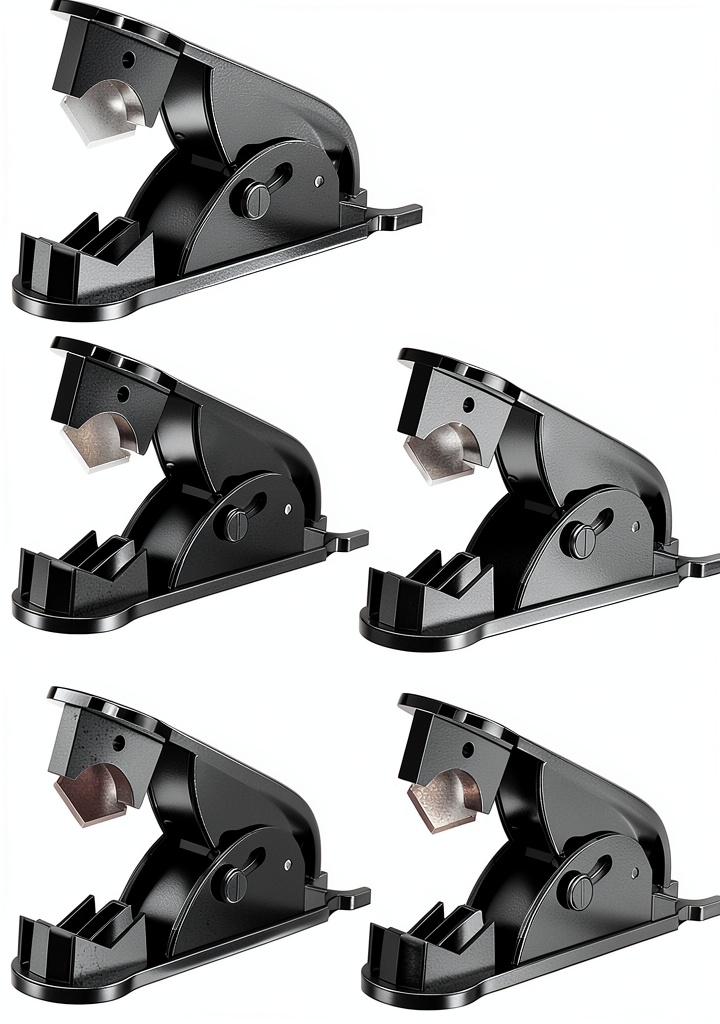
The cutter feels more like a sturdy kitchen gadget than a heavy‑duty plumbing tool. The ABS housing snaps together with a firm click, and the internal bearings glide smoothly when you rotate the handle. The biggest surprise is the self‑supporting angle: the cutter sits upright on the pipe without needing a third hand, which is a real time‑saver when you’re working in a narrow crawl space.
Performance in Real Use
Scenario 1 – Re‑routing a garden irrigation line. I needed to trim ½‑in PVC to fit a new elbow. After positioning the cutter, two half‑turns produced a clean, burr‑free cut. No need to sand the edge before gluing. The blade held its edge throughout three cuts, confirming the 304 stainless steel’s durability for occasional DIY work.
Scenario 2 – Replacing a cracked PU air‑line on a portable compressor. The tube was tucked under a workbench leg, barely 5 mm clearance. The cutter’s low profile let me swing the handle without bumping the bench. The cut was smooth, but I did feel the plastic housing flex a bit under the torque required for the thicker ¾‑in PU. After the fourth cut the handle began to wobble slightly, indicating the tool’s limit when pushing hard on larger‑diameter material.
Ease of Use
The single‑hand operation is genuinely intuitive: place the cutter, tighten the knob, and rotate. No extra tools, no clamping. However, the blade‑change process is a minor inconvenience. You must unscrew a tiny set screw, pop the blade out, and re‑insert a new one. For most DIYers this is acceptable, but frequent blade swaps add up in time.
Durability / Reliability
After a week of daily use (about 15 cuts total), the plastic body showed no cracks, but the knob’s grip started to feel a little slick from oil residue. A quick wipe restored it. The blade stayed sharp; I tested it on a fresh piece of PVC and it still sliced cleanly. In long‑term terms, the tool will likely survive occasional home projects, but it isn’t built for daily professional service.
Pros & Cons
- Pros:
- Very lightweight and portable.
- Self‑supporting design reduces hand fatigue.
- Clean cuts on soft tubing without burrs.
- Replaceable blade extends tool life.
- Price under $10 – excellent entry‑level value.
- Cons:
- Maximum OD 0.75 in limits use on larger pipes.
- Plastic housing can flex under high torque.
- Blade replacement requires a screwdriver.
- Not suitable for copper, steel, or high‑volume professional work.
Comparison & Alternatives
Cheaper Alternative – Generic 6‑in Mini Hacksaw
Cost: $3‑4. The hacksaw cuts any material, but it requires a steady hand, produces rough edges, and is awkward in tight spaces. It lacks a self‑supporting feature, so you often need a second hand or a clamp. For occasional, very small cuts on thin PVC, the hacksaw can do the job, but you’ll spend extra time cleaning burrs and risk uneven cuts.
Premium Alternative – RIDGID C‑Style Tubing Cutter
Cost: $28‑$35. Built with a metal body, a ratcheting mechanism, and a blade that handles copper, brass, and steel up to 1 in OD. The cutter provides superior leverage and durability for professionals. However, its size and price are overkill for a homeowner who only cuts PVC or PU occasionally.
When to Choose Each
- If you need a sub‑$10 tool for occasional PVC/PU cuts, the ONLYFU cutter is the sweet spot.
- If you’re on a shoestring budget and only need a one‑off cut, the cheap hacksaw will work but at the cost of finish quality.
- If you’re a plumber or mechanic cutting metal tubing daily, invest in the RIDGID C‑Style for speed, durability, and multi‑material capability.
Buying Guide / Who Should Buy
Best for Beginners
The low price, simple hand‑operation, and safe self‑supporting design make it perfect for first‑time DIYers learning to cut tubing.
Best for Professionals (Light‑Duty)
If you’re a plumber who only needs to trim soft‑tube fittings on‑site and want a pocket‑sized backup tool, the ONLYFU cutter can serve as a secondary cutter while you carry a heavy‑duty metal cutter for the main job.
Not Recommended For
- Frequent cutting of copper, steel, or large‑diameter (>¾ in) pipe.
- Users who need a tool that can be swapped blades without tools.
- Environments where the cutter might be dropped onto concrete – the plastic housing can crack.
FAQ
- Can the ONLYFU cutter handle copper tubing? No. The blade is designed for soft plastics; copper will quickly dull it and may damage the plastic housing.
- How often does the blade need replacement? For typical DIY use (under 30 cuts per year) the blade should last 1‑2 years. Heavy use on thicker PU may require replacement sooner.
- Is the cutter compatible with 3/4‑in PE water pipe? Yes, up to 0.75 in OD, but expect a bit more effort than with PVC due to PE’s slightly higher friction.
- Can I use it outdoors in cold weather? The ABS plastic remains rigid down to about –10 °C (14 °F). Below that it can become brittle, so avoid freezing temperatures.
- Is the $8.54 price a good deal compared to similar tools? Absolutely. Most comparable hand‑powered cutters sit between $12‑$20; the ONLYFU offers comparable cutting quality at a lower price point.
 Delphi Packard Metri-Pack 150 Wire Organizer Blue 22-16 Gauge 12052634